

RESEARCH BRIEFING
24 Mar 2026
Income gains to power consumer spending in Latin America
Slower regional growth, but rising momentum in smaller cities
Latin American cities have been pushed into the spotlight in recent years. Tariff threats, policy shifts, and political change are now bringing cities across the region into sharper focus, as a dense election calendar collides with structural and demographic shifts to reshape consumer markets.
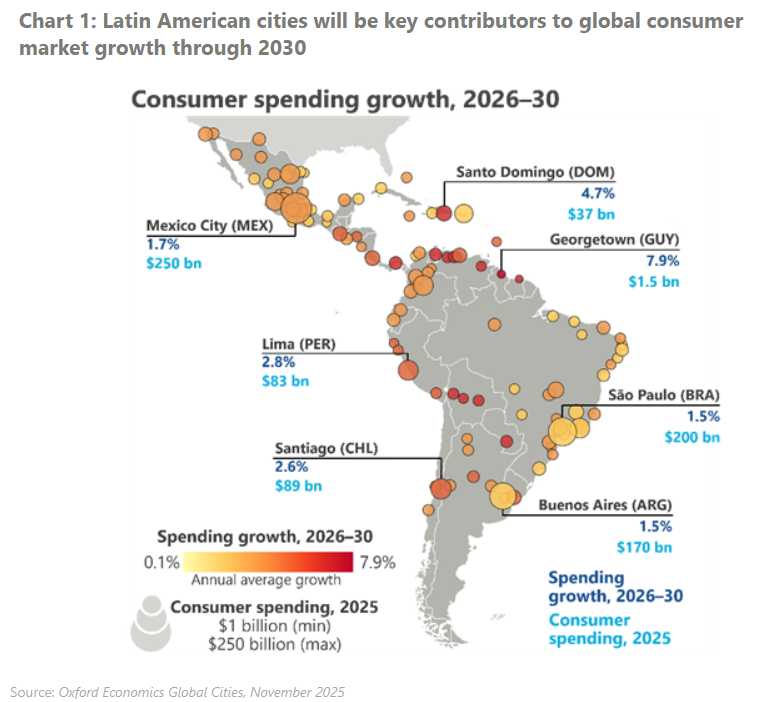
- We expect Georgetown, Guyana, to lead on the back of surging oil output, with real consumer spending rising 7.9% per year to 2030.
- Among the 1,000 cities covered by our global cities service, the 113 Latin American cities included in our analysis will deliver nearly 7% of nominal consumer spending growth to 2030 – more than African or Middle Eastern cities.
- By 2030, we forecast Latin American cities will have the world’s largest share of middle-income households, creating a powerful consumer class that will lift discretionary spending.
- Demographic trends are also shaping consumer spending. High urbanisation and modest birth rates are likely to limit population-driven growth, though some cities – such as Lima and Bogotá – are projected to buck the trend.
- Although Latin American cities will continue to age, the region’s age distribution is fairly balanced.
You might also be interested in
Tags: